Recently, Cass R. Sunstein, a noted Harvard College graduate in the fields of constitutional law, administrative law, environmental law and behavioural economics, wrote this book “On Rumors – How Falsehoods Spread, Why We Believe Them, What Can Be Done”. This poor man must believe everything he sees reads and hears because he sure isn’t living in reality. What is truly astounding is that this individual is also Administrator of the White House Office of Information and Regulatory Affairs. This information on its own may not seem very threatening, until the facts of this person are revealed. Facts are simply NOT rumours.
Mr. Sunstein begins his book explaining about rumours and how long they have been around historically. Almost everyone knows what rumour is and why it spreads. The definition of rumour is quickly learned by most people. Clear-thinking people want to know what facts are or what theory is. Rumour is a statement based on a perception, and then spoken to another individual who then explains that same statement, but in their own words. This result is then that person’s perception of the original statement. The premise behind the rumour is twisted and warped by the time it reaches the end of the chain. The last individual in the chain may then have a completely different perspective of that original statement. This perspective is then completely in error. For the most part, the results will be circular reasoning. Circular reasoning is simply another phrase for rumour.
Since Cass Sunstein references many tipping points in his book, he is correct that tipping points with rumours are reached. His fear is that a tipping point is near, but his assumptions are not based in reality, but the rumours that have spread for far too long in America.
The Original Statement
Our Constitution is the statement. For several years, this statement stood as truth after the American Revolution.
The Rumour
At some point in Americas’ history, this statement was read by an individual who must not have understood the simple words that are clearly evident to most Americans who love this country as much as they love their families. Once that individual began his campaign to convince others that his perception was correct and that the Constitution contained errors, the rumour began to spread. Others were convinced and began using this rumour to convince others they were also correct in their assumptions. Based in part on the ability to create Amendments, our Congress and Senate (our government) applied these perceptions and enacted legislation that was based in circular reasoning (rumour). For decades, Amendments have been upheld by Supreme Court justices, many of whom based their decisions on this circular reasoning.
The Results of Rumour
The most recent, objectionable ruling was the Supreme Court in April, 2009 who upheld that the Environmental Protection Agency had the right to utilize cost-benefit-analysis when making environmental decisions. Since the rumour began many, many years ago, the federal government believed it had the right to shut off water to the farmers in the San Joaquin Valley to save a little minnow. This minnow was saved by the water being turned off, yet this little minnow simply swims through the river to reach its destination, the ocean. There, this little minnow dies. This was the purpose of the minnow swimming down the river in the first place. To reach the ocean so it could die in the ocean. America, we paid for this little fish to reach the ocean to die.
The Results of the Rumour
In this instance, the solution is so very evident. Turn the water back on.
Yet, this appears to be impossible. Instead of using simple, factual logic, the government adheres to the Supreme Court decision. This decision is not based in logic, but based on man-made legislation. This then is the conundrum. Does our government uphold the law that is now harming people in California? By upholding this law these farmers are watching their crops turn to dust and wither away, unemployment is around 40% in that area. Additionally, since California’s crops produce close to 12% of Americas’ produce (fruits and vegetables) other people in America will be suffering very soon. Lack of produce and when there is produce, it will be extremely expensive. How valuable is the American dollar today?
It cannot be understood by a hard-working, intelligent American who loves their families, believes in individual choice, how America has arrived at this scenario. The agency in charge of watching the environment has turned into the manager of the environment. No agency, no government can ever “manage” the environment. Nor can cost-benefit-analysis be used in making decisions of that magnitude. God and Nature manage that, even if humanity ignores its own progress.
Ultimately, the tipping point is being reached quicker and quicker as each day passes. The absurdity of the reports of news is impacting all Americans. Decisions cannot be made quickly because we’ve become a nation of “Law and Order”. The Constitutional Confusion is reigning supreme and the rumours that began a long time ago in our nation are becoming evident. Clear-thinking Americans MUST realize this, recognize where the Amendments were made in error and correct this enormous mistake. Our Constitution, our faith, our principles and values demand it be corrected.
If we want to remain free people.

Showing posts with label government power. Show all posts
Showing posts with label government power. Show all posts


The Question That Isn't Being Answered
From the time we are able to form sounds into words (language) as infants growing into children, questions are always asked by human beings. That is our nature. It is the answers to these questions that allow a child to begin filtering those responses into meaningful knowledge. This knowledge is more than just knowledge, it must be passed on from child to child, generation to generation. As this process transpires, language is built, knowledge is enhanced and common sense (the collective wisdom of humanity) grows. The baby-talk reaches our ears from that childs' voice and we are happy to be hearing these noises. But when an actual word is heard, we are amazed, pleased and proud. We finally recognize with our mind and sense of hearing that this child is learning language. We then brace ourselves for what comes next - the all-encompassing question......Why?
When the child asks this, the parents' minds begin to sift through the knowledge they have in attempts to answer that question. As we begin to answer Why? for the child, we realize that there is always more than one answer for Why?
How does the simple question of asking Why? ever change for the child? The natural curiousity all humans experience from birth is inherent to our nature, whether young or old. Does that natural curiousity get dampened by nature or nurture? Or is it from outside influences (society) that have convinced people that society (by definition today it has been created by our government) knows what is better for the child? The results of all this external influence on the family and children is that now, people who are asking Why? are not receiving the answers that satisfy the nature of the question, Why?
Most of the time, a single response to the question Why? simply doesn't satisfy the curiousity of the child. If the child receives an answer that doesn't resolve the question in the childs' mind, that question is asked over and over and over again. This is true up to the point the child either gives up because the question is not answered to that childs' satisfaction (human instinct) or the parents give up on the attempt to answer. The child perceives this and the natural curiousity is dampened. If numerous answers are provided to the question, Why?, the child will then reflect on all those different responses and begin questioning Why? all through life.
All clear-thinking people never stop asking Why? and are now wondering "How did our government arrive at this time in history where our elected politicians provide simple one-statement responses to our questions of Why?"
Why must we pay for healthcare for all?
Why must we pay for companies too big to fail?
Why must we accept the idealogy of one political party or the other?
Why have we accepted the lesser of the two evils when electing a person whom we expect will guide us through the next four years? Did his words convince all of us? Or was it due to the fact that he was provided with enough money to spread his word? That his message was full of hope and change which convinced some people that only he knew how to solve their life problems of water, food and shelter?
Why has our government reached the point where it believes it must always DO SOMETHING rather than leave us, we the people, alone to simply live our lives as we were intended by nature to do? Do laws allow us to live? Or must we constantly wonder which law we break each and everyday in our attempts to provide ourselves with our basic needs? Are we truly a nation of "Law and Order" where we now dampen our human instincts, yet promote the fallibility of human emotion so that now we only know how to live by rule of laws?
There are many, many questions that over the decades have never been answered satisfactorily to the people. Our time in history has proven this statement to be accurate and true.
Isn't it time to start asking the real question, Why? When this question can be answered, to the satisfaction of the majority of people, the time will be that we will move forward, as a nation, and our country will be ours again. By the people, for the people.
5kYL: Principle Twenty-one
STRONG LOCAL SELF-GOVERNMENT
The case for a strong local government is to refrain from centralizing power. Where the federal government is to be interested in things that affect everyone in the nation, the local municipal or county governments deal more at the individual level. This is what's so troubling about the federal government as it redistributes the revenues taken from hard-working citizens.Let's look at a scenario: An amendment is added to a bill in Congress which provides funding for a new sewer system in Seattle. Now, obviously if a community needs a new sewer system, it should be up to that community which uses it to come up with the funds. But instead, think of a small farming community in Ohio that now has to help fund it too even though not one individual may benefit from it.
5kYL: Principle Nineteen
LIMITING THE POWERS OF GOVERNMENT
In order to further limit the powers of the government, a separation of powers between the individual States and the federal government were established. In addition, as a system of checks and balances, neither federal nor state powers were to be greater than the other to ensure security for the people.Many States have been concerned that their rights have been increasingly infringed upon. Therefore many State houses have introduced resolutions to reinforce their sovereignty. Also the Patrick Henry Caucus has been established to assert States Rights/Tenth Amendment Rights.
5kYL: Principle Seventeen
CHECKS AND BALANCES
Though the three branches of the U.S. government are separate in power, the Constitution also provides that the branches balance each other. This is accomplished by blending some powers between branches. This blending is intended to prevent usurpation, but as noted in the previous post and as Skousen explains, laws have been errantly created from the Judiciary and the Oval Office in forms of judicial legislation and executive orders. But if the checks are ignored by all branches simultaniously, there is no authority other than the Constitution to enforce them, which in the eyes of too many politicians is just an outdated piece of paper.I take it back, there is one very important authority which should be adequate in keeping the government in line. As a matter of fact, it's many indivdual authorities. That of course is We The People! We were the only hope the founders had in keeping the ultimate check on the government. But even if the people were to remain informed and involved what happens when the politicians choose to ignore the electorate? This is when we rely on a very important provision in the Constitution where we have the power and gather at the polls on election day.
5kYL: Principle Sixteen
SEPARATION OF POWERS
Both Polybius and Montesquieu were influential in explaining a more perfect form of government in which powers are divided while at the same time in coordination. Montesquieu understood that if the powers of the executive and legislative were instilled in a single body, liberty is destroyed. This is a problem we face now with our two party system. If both Houses of Congress and the White House are controlled by one party, it is unlikely that any checks and balances occur because it is unusual that politicians break from the party line.Now, likewise, a separate judiciary is necessary to ensure the laws are in compliance with the Constitution and ensure the laws are enforced. Here I must add the importance of electing the proper legislators and President as they appoint and confirm whom may occupy the judiciary. This is the one branch of our government that cannot be over-ruled by the other branches. Instead rulings can only be overturned by succeeding judiciaries. This happens seldom.
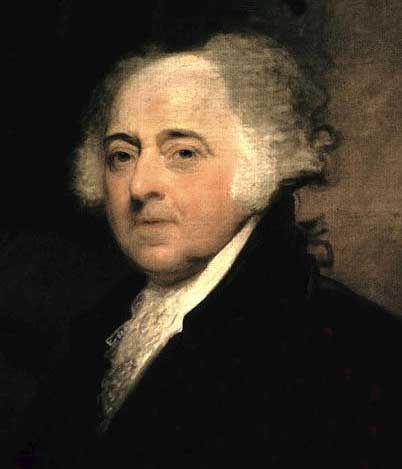 I must point out here, as Skousen does, the influence of John Adams in establishing the separation of powers in the Constitution of the United States of America. You may want to explore more about John Adams in David McCullough's book, or look for a copy of The American Enlightenment, which is the book cited in this chapter.
5kYL: Principle Fifteen
FREE-MARKET ECONOMICS
After reading this chapter I am tempted to tackle the tombs of Adam Smith. However, it may be imperative to understand the formula to free-market economics Skousen outlined along with the four laws first. Until we as a nation relearn these and begin to apply them fully, I can hold off trying to digest the particulars of The Wealth of Nations.So what is the formula to free-market economics?
1. Specialized Production - So far we are safe in this aspect, except for institutions such as affirmative action.
2. Government interference is all we're witnessing these days. Everyday the words of Jon Galt run through my head: "Get the hell out of my way!"
3. Government monopolies are forming in the financial institutions, auto and soon the health industry.
4. Supply and Demand - Because of government intrusion into the private sector, prices can not be regulated by the morally superior means of competition. This is because the government isn't concerned with making profit. This leads to the next point...
5. Profits - This is the only reason for the free-market to exist. However, companies like Exxon have been scorned for years because of their record profits. No matter they provide a service that without it, this country and the world would shut down.
6. Competition - Without competition, improvements aren't necessary and prices go up.
What are the 4 Laws?
1. The Freedom to try.
2. The Freedom to buy.
3. The Freedom to sell.
4. The Freedom to fail.
The founders knew that the government is the greatest threat to economic prosperity. But they also believed that it had a limited role. The responsibilities of government is to prevent:
1. Illegal Force
2. Fraud
3. Monopoly
4. Debauchery
One important responisbility of the government that was never rightly implemented was the regulation and coining of the U.S. currency. This was never intended to be the role of a private institution like the Federal Reserve.
Question to consider:
Why is it unfair for government to obtrude on the private sector?
5kYL: Principle Fourteen
PROPERTY RIGHTS ESSENTIAL TO LIBERTY
God commands man to multiply and replenish the earth, to subdue it and bring it under dominion.Because property earned is a right of it's owner, it can't lawfully be taken away. This creates incentive for innovative people to continue developing, creating, and profiting. Property is an extension of life, energy, and ingenuity.
One main cause for the American Revolution was because the English Crown was excessively confiscating the property of the colonists by means of taxation without their consent (or representation).
A prominent government function is to protect the rights of property of the citizenry. However, the meaning of "general welfare", has been distorted. Since the 16th amendment of the Constitution was ratified, and the confiscation of peoples' property was made legal, that property has been misappropriated in the form of redistribution to non-earners.
So what is an accurate definition of "General Welfare" that appears often within the Constitution?
It is the belief that the poor should be taken care of, but who's role should this be, and to what capacity?
5kYL: Principle Thirteen
PROTECTION AGAINST HUMAN FRAILTY
"How can you have an effective government but still protect the freedom and unalienable rights of the people?"In the American tradition, more confidence is placed in the people than in the leaders. This is because human frailty is linked to power. Skousen sarcastically said that every unconstitutional action was for "good cause". But this is because the leaders were granted too much power. One way increase in grabs of power occurs is when there are no checks between the separate branches. This often happens when one party controls two or all branches of government. When there aren't sufficient checks in power in the government the Constitution is frequently ignored. But how is this eschewed? Abolish the two party system? Promote more parties so the two parties in power now are demoted?
George Washington described government to a fire in that it's "[A] dangerous servant and a fearful master." This is a similar analogy I like to make for arguments against decentralization of power. If you spread the coals of a fire it won't burn as hot or for very long. Likewise, temperance in centralized power infrequently affects the populace negatively and if the people happen to get burned, it's short lived.
Unfortunately, government is a dangerous force that must be harnessed, which is what the Constitution was designed to contain. The Constitution is designed to give authority to officials to perform their duties effectively while at the same time provide strict limitations on said officials. Madison puts it more concisely: "You must first enable the government to control the governed; and in the next place oblige it to control itself."
What is meant when Skousen claimed the original Constitution will never be obsolete?
Let's examine this other quote from Madison:
"I believe there are more instances of the abridgment of the freedom of the people by gradual and silent encroachments of those in power, than by violent and sudden usurpations."Is the inverse of this statement true? After a slow gradual degradation of liberty, is the only way to regain it a swift and violent revolution?
5kYL: Principle Ten
SOVEREIGNTY OF THE PEOPLE
From the 9/12 project:9. The government works for me. I do not answer to them, they answer to me.
From previous chapters we learned about man's unalienable rights. Among these, the right to rule over others is not permitted. Unless, that is, if the majority of the people consent to be led. The one(s) prescribed to lead are thought to be servants of the people. And it is up to the people to replace their leaders once it is deemed they are no longer adequately represented.
Though many throughout history have proclaimed they are the divine rulers of a nation, God has never ordained anyone the right of authority. Even Jesus never assumed authority over another.
5kYL: Principle Seven
EQUAL RIGHTS, NOT EQUAL THINGS
From the 9/12 project:7. I work hard for what I have and I will share it with who I want to. Government cannot force me to be charitable.The government may not have any power over which the individual citizen has legal right to do. One cannot take what is not his and give to another he deems is in need. This follows that the government shall also have no authority to do so.
In America, we were protected by equal opportunity to acquire as much wealth/property as we please. It is the incentives that enables the wealth and prosperity of this nation. But once the government starts taking away incentives by placing exorbitant taxes on high-wage earners or by giving welfare checks to no-wage earners in the name of equality, equal opportunity is no longer protected. Ultimately, the more wealth taken from a few and given to many others, results in all living equally miserable.
The government should only protect the people's equal rights, not provide equal things. As noted previously, we are a generous nation. If our neighbor is in need, we are encouraged to pick him up. But it is not encouraging to be forced by government to be charitable.
5kYL: Principle Six
ALL MEN ARE CREATED EQUAL
In America, man is equal in the eyes of God, by the established laws, and in the protection of his rights.This chapter explains the struggle of the second-class or minorities. I choose to disregard this as I consider the most important, and as a modern philosopher states it, the smallest minority, is the individual. It's not productive to exemplify a group that collectively surmount adversity, rather I extol the one who did. Only in America is this possible.
One important thing to note is that government hand-outs never improve the minority's position, as they are only supplements to his freedom to succeed or fail.
5kYL: Part 1
So our view of left and right has, let us say, skewed a bit over the last 230 years. What we have today it seems are two sides of the same political coin. One side moving towards tyranny and the opposite, though facing the other way, is following right behind at the same coins-width pace.
Skousen: "[U]nfortunate that issues [are discussed]in terms of political parties instead of political power".
Let me commence this post concerning the Ruler's Law which represents the left side of the political spectrum. #9 on the list of characteristics of Ruler's Law states that problems are always solved by issuing more laws, setting up more bureaucrats, more regulation, and continually adding taxes. This is exactly the course we've been heading for decades. We have an exorbitant corporate tax rate that makes it harder to compete. We've increased the size of Government and set up more excessive federal agencies over the years. Incessant laws and regulations are crippling rather than solving the nation's objectives.
Also, look at #11 on the list of characteristics. We don't necessarily have a class of nobility, but there are many who comprise a privileged class we refer as the elites. Then there is the class that seems to subject themselves to those elites. Examples of the latter class are found in the inner-cities where they live in perpetual poverty and pay higher taxes, yet continue to support the elitists.
Rather than Tyranny or Anarchy, the founders wanted to establish a government similar to the systems established by the Anglo-Saxons and ancient Israelis. In the pamphlet Common Sense, Thomas Paine elaborates on his expostulation of Ruler's Law and the prohibition of Kings in Israeli law.
 Proclaim LIBERTY throughout all the Land
unto all the Inhabitants thereof
Questions to Consider:
So what of this natural inclination to move towards tyranny? What furthermore do you suppose could have been added to the Constitution to slow down this tendency?
What is meant by "coordination without consolidation"? Why is it important to require compromise and equally important to refrain from centralization of power?
Finally, the founders warned against the welfare state, yet we find ourselves deeply entrenched therein. Sam Adams remarks that it is "unconstitutional" to permit such a system. Where and when did we turn wrong? Also, where in the Constitution can you discover collectivism and the re-distribution of wealth prohibited?
Skousen: "[U]nfortunate that issues [are discussed]in terms of political parties instead of political power".
Let me commence this post concerning the Ruler's Law which represents the left side of the political spectrum. #9 on the list of characteristics of Ruler's Law states that problems are always solved by issuing more laws, setting up more bureaucrats, more regulation, and continually adding taxes. This is exactly the course we've been heading for decades. We have an exorbitant corporate tax rate that makes it harder to compete. We've increased the size of Government and set up more excessive federal agencies over the years. Incessant laws and regulations are crippling rather than solving the nation's objectives.
Also, look at #11 on the list of characteristics. We don't necessarily have a class of nobility, but there are many who comprise a privileged class we refer as the elites. Then there is the class that seems to subject themselves to those elites. Examples of the latter class are found in the inner-cities where they live in perpetual poverty and pay higher taxes, yet continue to support the elitists.
Rather than Tyranny or Anarchy, the founders wanted to establish a government similar to the systems established by the Anglo-Saxons and ancient Israelis. In the pamphlet Common Sense, Thomas Paine elaborates on his expostulation of Ruler's Law and the prohibition of Kings in Israeli law.
 Proclaim LIBERTY throughout all the Land
unto all the Inhabitants thereof
Questions to Consider:
So what of this natural inclination to move towards tyranny? What furthermore do you suppose could have been added to the Constitution to slow down this tendency?
What is meant by "coordination without consolidation"? Why is it important to require compromise and equally important to refrain from centralization of power?
Finally, the founders warned against the welfare state, yet we find ourselves deeply entrenched therein. Sam Adams remarks that it is "unconstitutional" to permit such a system. Where and when did we turn wrong? Also, where in the Constitution can you discover collectivism and the re-distribution of wealth prohibited?
5kYL: Preface
Let me commence in the preface of The 5000 Year Leap (5kYL) as well as the pages preceding the actual text (8th printing, August 2007). In the section, “the Challenge,” Ronald M. Mann explains how the U.S. has “out distanced the world in extending the benefits of inventions and discoveries,” and “have been responsible for more discoveries and inventions than any other nation,” and “have given more dollars in aid and relief than most of the world nations combined.”
A.D.D. Moment:
But what in the Constitution mandates this type of exceptionalism? There is not one article in the Constitution that requires innovation. Nor does it require that citizens shall work at all. Our military is not of conscription. Our farmers aren’t required to produce anything more than they deem necessary; only lately have laws been enacted where farmers are actually subsidized for not producing. Yet “we have never suffered famine.”
The settlers of Jamestown were no different from any other human in history and neither are our founding fathers. So what made this Nation different? See, the settlers of Jamestown tried out a communal system at first but later turned to free-enterprise. They got to see the beginning of the sunrise.
Are we unaware/desensitized of the freedom we live today? In the forward Stephen Pratt says he was “functionally illiterate...of the principles and practices of freedom.” Skousen says, “every new generation…seems to feel [the need] to reinvent the sociological wheel.” We know our rights and privileges but not our duties and responsibilities.
Unfortunately, through ignorance and apathy, our freedoms are slowly eroding. One example in the Preface, Skousen’s professor of Constitutional Law would note how Congress was “continually seeking answers to the nation’s ills through remedies…not authorized by the Constitution.” These actions whether devious or not were permitted by citizens too ignorant to realize. This was at the time of the Great Depression (read this), and actions like those persist to this day in all branches of the federal government.
A.D.D. Moment:
If you have the version that includes a forward by Glenn Beck please submit your sapience of its contents.
But what in the Constitution mandates this type of exceptionalism? There is not one article in the Constitution that requires innovation. Nor does it require that citizens shall work at all. Our military is not of conscription. Our farmers aren’t required to produce anything more than they deem necessary; only lately have laws been enacted where farmers are actually subsidized for not producing. Yet “we have never suffered famine.”
The settlers of Jamestown were no different from any other human in history and neither are our founding fathers. So what made this Nation different? See, the settlers of Jamestown tried out a communal system at first but later turned to free-enterprise. They got to see the beginning of the sunrise.
Are we unaware/desensitized of the freedom we live today? In the forward Stephen Pratt says he was “functionally illiterate...of the principles and practices of freedom.” Skousen says, “every new generation…seems to feel [the need] to reinvent the sociological wheel.” We know our rights and privileges but not our duties and responsibilities.
Unfortunately, through ignorance and apathy, our freedoms are slowly eroding. One example in the Preface, Skousen’s professor of Constitutional Law would note how Congress was “continually seeking answers to the nation’s ills through remedies…not authorized by the Constitution.” These actions whether devious or not were permitted by citizens too ignorant to realize. This was at the time of the Great Depression (read this), and actions like those persist to this day in all branches of the federal government.
Subscribe to:
Posts (Atom)